By Matthew Moorcroft
Strong Recommendation
- Directed by Florence Miailhe
- Starring Emile Lan Durr, Maxime Gemin, Arthur Perreira, Axel Auriant
- Not Rated
This piece was written during the 2023 SAG-AFTRA strike. Without the labor of the actors currently on strike, the film being covered here wouldn’t exist.
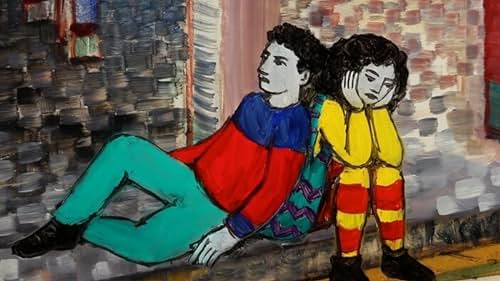
Watching The Crossing is like going to an art exhibit. I know this is likely a bizarre way to start off a discussion, but hear me out. The Crossing, with it’s animated sequences that can only be described as a painter’s dream, is more akin to travelling the various art styles of a gallery of talented artists. You may have seen some of it before, maybe in passing or even online when it went viral for some reason, but it’s still exquisite in it’s design. It’s impossible to look away.
That’s The Crossing, the feature directorial debut of French painter/animator Florence Miailhe. Miailhe, while mostly obscure, has been making shorts for upwards of three decades, beating the Loving Vincent duo to the punch in terms of having her animation literally be painted and shown on screen. With her getting the full feature treatment this time, and with a story that’s near and dear to her heart (a story of immigration inspired by her grandmother), The Crossing‘s ambitions are almost entirely realized.
Even if you can’t connect with with Miailhe’s tale for whatever reason, there is no denying that it’s simply sublime from an artistic perspective. Every frame of this looks like a beautiful canvas come to life, and the multitude of styles used to represent not just the cast of characters here but also the emotions of said cast is really something else. No fade to blacks here, instead transitions are done via paint stroke or the landscape shifting into something it’s not – giving the impression of a fantastical fairy tale that’s always unexpected and new.
The animation is so good across the board, actually, that you sometimes forget that the story they’ve decided to tell here is rather stock and standard fare when you get down to it. Sure, it’s great to see an animated film deal with this kind of subject matter – especially when it’s not edited down or aimed at a younger audience like many of them try to be – but if know refugee stories you’ve seen this kind of tale in the past and The Crossing doesn’t try to do anything different. Then again, I don’t think it’s trying to be; it feels like Miailhe wants to give you an open perspective on this that represents the general experience rather then an individual one.
And ultimately, I think it ends up working in the favour of the final film. I appreciate how bleak this thing does end up becoming by the end, with you completely unsure on whether or not our main cast is going to make it. And when the film does end, it’s less of a triumphant victory and more of a bitter melancholy where you recognize that, despite everything, we still lost most of what we loved and we can never get it back. A tough pill to swallow for any film, but the horrific nature of the story and the downer of an ending insures that it won’t leave your mind any time soon.
The Crossing is likely meant to be more appreciated then be entertaining, which is fine. Art’s purpose isn’t always to satisfy some kind of primal urge, sometimes it’s instead meant to invoke darker, more challenging thoughts, and The Crossing is nigh perfect in that regard. As a film, it’s mostly a standard, if well executed story about escaping oppression. But as an artistic statement? It’s one of the most beautiful, poetic things you’ll ever see, and for that reason is worth watching alone.
 Matt's Media Corner