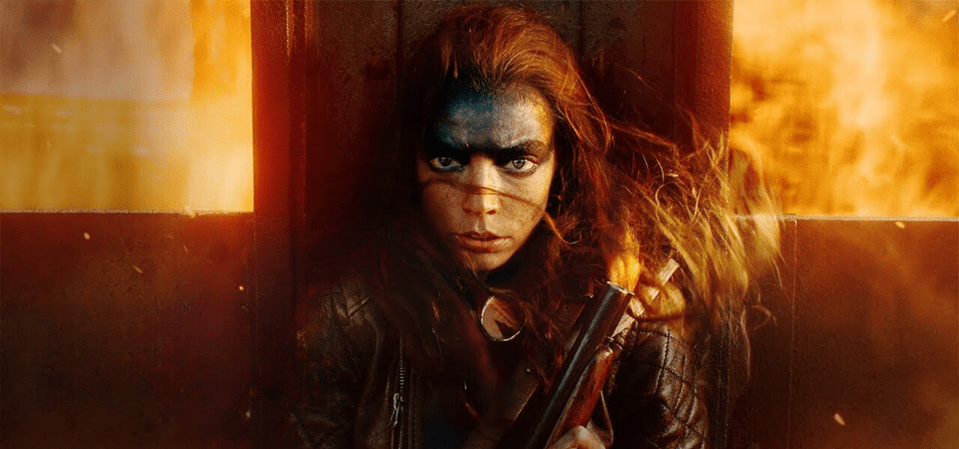
By Matthew Moorcroft
Highest Recommendation
- Directed by George Miller
- Starring Anya Taylor-Joy, Chris Hemsworth, Tom Burke, Lachy Hulme
- R
How do you follow up Fury Road?
A sane person would tell you that you don’t. The once in a lifetime action picture that sweeped the technical Oscars and is a fan favourite among many a cinephile and action buff isn’t something you top. Everything else you make will forever be in the shadow of it, and it’s unique structure – a two hour long constant car chase and ever escalating series of setpieces, roaring engines, grimey oil, and explosions – is difficult to replicate properly.
George Miller is not a sane man. After all, a sane man wouldn’t have made Fury Road to begin with, with it’s insane technical requirements and impossibly difficult, grueling shooting schedule that left most of it’s cast exhausted and unable to speak to each other for years afterwards. While Furiosa wasn’t has difficult to shoot as his prior entry, it certainly looks equally as demanding, not all in the least of having a grander, more mythic scope. Smartly, Fury Road this is not, as Furiosa almost immediately signifies both by it’s visual storytelling as well as it’s more talky heavy segments. Fury Road’s grainier, filmic look is replaced by a brighter, more digital sheen yes, but it’s also one that’s more painterly in it’s aesthetic, emphasizing the folklore that’s always been inherent to the Mad Max franchise in one way or another.
The time placement is irrelevant. Sure, this is definitely a Fury Road prequel, but finding a time for it’s relation to the other Max films is a fools errand as it’s quickly apparent we aren’t meant to take much of this literally. Furiosa is as much about the making of a myth as it is a myth itself, an epic poem disguised as a post-apocalyptic car nut masterpiece. Words passed down from person to person, changed over time to fit the needs of whoever wishes to hear them. And yet, much of the biblically sized outings of the picture – much of which involves warring clans, large armies of biker gangs, and fortresses guarded by steel and chassis – are all in service to a much more brutal, entirely bleak survival picture that puts our lead through hell and back again.
While Charlize Theron’s take on the character was instantly iconic in the same way that Sigourney Weaver’s Ripley was, Anya Taylor-Joy instantly taps into that energy with ease. She’s almost completely unrecognizable here, with moments where you almost swear you are watching a younger Theron return. It’s a monumental performance only bested by a career best Chris Hemsworth, whose devilish villainous role is given layers upon layers to chew on beyond just an over the top facade. Instead, he is a warlord torn up and chewed back out by the Wasteland, wanting to return to some kind of normalcy without realizing he too has gone mad in the sun. It’s a brilliant, fine line he walks here, staying just campy enough to lean into Mad Max’s inherent pulpiness while also turning up the menace when things start to collapse.
While it’s hard to top Fury Road‘s kinetic, yet pitch perfect editing tricks, Furiosa‘s focus on longer, more sustained action helps sell that this is a bigger story. A stretch in the middle of the picture – a War Rig battle that really feels like a smaller version of the opening 20 minutes of Fury Road – is particularly stunning as it uses every gun in it’s arsenal both literally and figuratively. Dare I say the shootouts are actually somehow even better then they were before, punctuated by a strong sense of blocking and environment that gives the audience ample room to wonder how they’ll get out of a certain mess, if they even will at all.
Furiosa’s final minutes are the key to the picture though, leading into Fury Road almost directly as one would expect and turns the picture into a missing piece that we didn’t know existed. The deepened supporting cast of both films now feels like it’s part of one huge narrative, a story of one woman trying to find her way home. George Miller’s Odyssey, his Illiad.
 Matt's Media Corner