By Matthew Moorcroft
No Recommendation
- Directed by Todd Phillips
- Starring Joaquin Phoenix, Lady Gaga, Brendan Gleeson, Catherine Keener
- R
Does Todd Phillips feel like J. Robert Oppenheimer? Does he regret his own creation? It very much seems that way if Joker: Folie à Deux is to be believed, who opens up with an animated sequence that sets up much of the story and conflict of said sequel. This animated sequence, which is a darkly comedic version of classic Warner Bros cartoons from the 40s and 50s, shows Arthur Fleck being tormented by the shadow of the Joker and the things he did – leaving Arthur beaten and bruised after his rampage is complete. This separation forms the basis of the film’s main thesis.
Which is that you should feel bad for liking Joker as a film.
The problem with this thesis, even if it’s bold and lowkey kind of respectful, is that Joker wasn’t a good film to begin with, mostly just filled with platitudes about male loneliness and class conflict that had nothing meaningful to add and were just lifeless riffs on far better films in the past. There is nothing to be meaningfully upset about in Joker: Folie à Deux, except maybe from the obsessive superfans that most people don’t listen to anyways for good reason. Phillips seems have designed the sequel from ground up for the sole purpose of being angry and alienating to as many people as possible; a provacative statement about the nature of franchising and superhero cinema while also bringing to forefront his initial points about how we leave our most vulnerable, well, vulnerable.
Phillips is also a hack of a director, unable to formulate an original idea to save his life, and thus when moved away from the Scorsese influences of the original, Phillips instead offers… nothing in return, save for some Demy in the admittedly colorful visuals and Bob Fosse in the musical sequences (the only genuinely novel thing in the picture). But then again, what do you actually do for a Joker sequel, a film that’s inherently designed as a standalone and clearly only received a sequel as the result of it being a massive hit and looking good on a spreadsheet? Again, Phillips has no idea, instead spending 138 minutes talking about the first film and lecturing to it’s audience about how little they actually understood it.
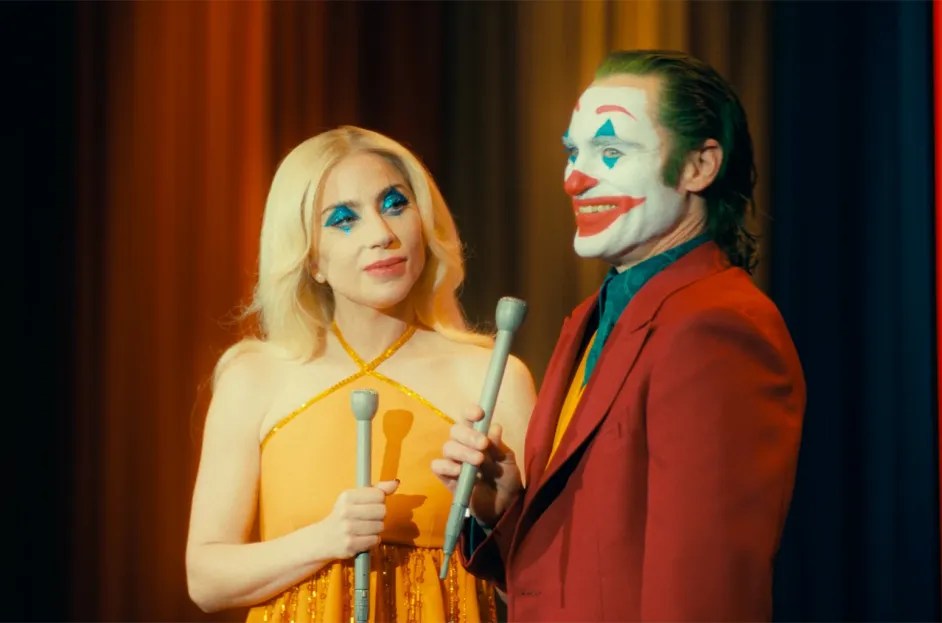
And then there is Harley Quinn, or Lee in this iteration, who is turned on her head and has become the corruptor as opposed to the corrupted. Thorny implications aside – these movies really aren’t beating the “we hate women” allegations – Phillips is using her a stand-in for the fanbase that the Arthur Fleck character has received over the years, who don’t actually care about the message the original film tried to put out. They only see the rage and agree with it, refuse to look inward, and when the facade is broken they crumble. This would be a more interesting take if Phillips actually wanted to do something with it, but just like the themes of the first, it’s woefully undercooked and it’s up to both Phoenix and Gaga to take up the slack.
And take up the slack they do. They are both as great as you would think, with decent enough chemistry to make the musical moments work. Said musical moments are mostly a mixed bag; much of the more striking images are here, and the usage of color and lighting is occasionally stunning to look at. On the other hand, outside of a great courtroom sequence, none of them are particularly revealing or interesting from a character perspective. The jukebox musical format means the songs aren’t made for this, and it clearly shows as a lot of them feel randomly plucked out of a hat. At least Gaga can sing her ass off here (less so Phoenix, who is committed but a little raspy) and makes the music sing when she is the lead focus.
But Joker: Folie à Deux‘s biggest crime is that it’s just boring as sin. After all is said and done, Joker: Folie à Deux just languishes on and on, wasting all of it’s considerable technicals on a script that clearly needed some trimming, and a climax that seemingly just keeps going instead of knowing when to wrap up. It’s got a compelling final image, sure, but is it worth it to get there knowing how dull the entire affair ends up being? And for a point that ultimately isn’t aimed at people who don’t like (or at least already understood) the first film? I think for some it could be, but for me, as somebody who has seen the films these things consistently crib off of, I think that we can do better then somebody’s sloppy leftovers.
 Matt's Media Corner