By Matthew Moorcroft
Strong Recommendation
- Directed by Matthieu Delaporte and Alexandre de La Patellière
- Starring Pierre Niney, Bastien Bouillon, Anais Demoustier, Laurent Lafitte
- Not Rated
One of the most adapted and beloved books of the 19th century, we are graced with yet another adaptation of The Count of Monte Cristo. This time, it comes courtesy of Matthieu Delaporte and Alexandre de La Patellière, who previously scripted a two-part adaptation of Alexandre Dumas’ other beloved classic The Three Musketeers. Unlike those films however, this one finds the two in the director’s chair as well, taking the reigns of France’s first theatrical version of the novel since 1968, and the first one to actually adapt the original setting of the text.
This is fascinating as despite The Count of Monte Cristo being something of a literary classic, it’s also one of those pieces of media that has never actually gotten a true 100% accurate adaptation often. The previous widely known attempt, the very good if actionized Kevin Reynolds version from 2002, changed much of the political nuance and thriller vibes that are integral to that novel’s power and success; a likely result of the Count himself being seen as a swashbuckling hero in most later tellings of the story. With this new version, Delaporte and Patellière have tasked themselves now with the unenviable task of being the first in a long time, maybe ever, to try and do a full adaptation of the original story.
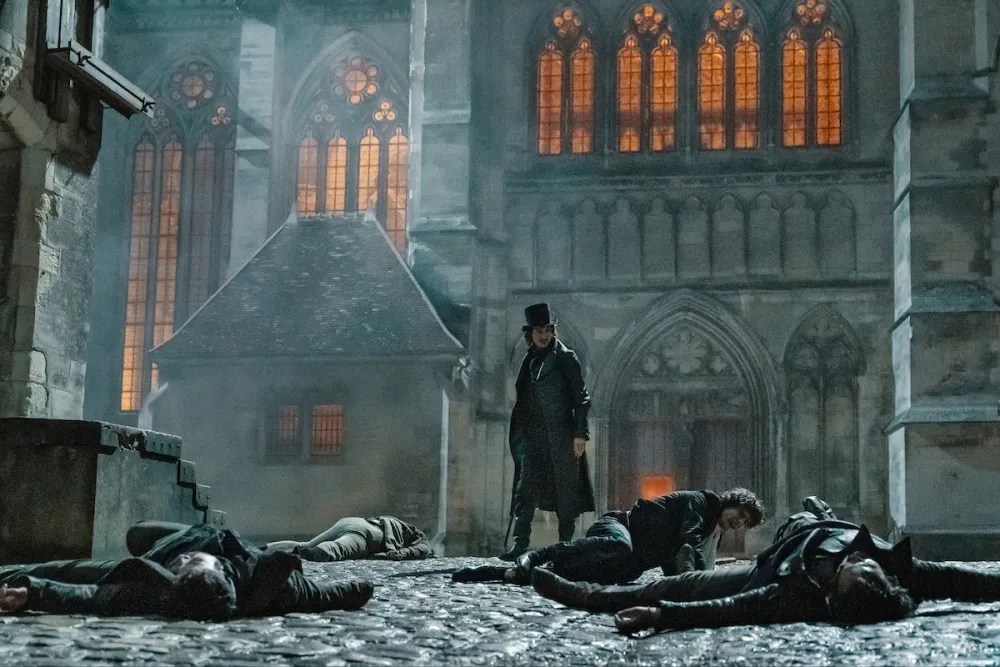
The Count of Monte Cristo is fantastic, especially on a technical level. This shouldn’t be surprising to anybody familiar with the two directors, who have worked on some of France’s largest ever productions to which The Count of Monte Cristo is no different. At 43 million euro, it’s one of the most expensive films the country has ever produced and it looks like it. From it’s opening sequence set on the sea against a burning ship to it’s lavish set design and costumes, it looks and feels expensive with the vibe of an old school epic. For fans of the “they don’t make em like they used to” crowd, this will already be a treat as it’s heavy reliance on practical set work and effects means what little CGI there is is mostly used as background work or the occasional animal which is understandable.
But all of the colorful, impressive technical craft in the world could be here and not mean squat if the story wasn’t done justice, but thankfully Delaporte and Patellière’s script is the real winner here. Trying to condense a story that takes place over the course of basically 20 years is no easy feat, and while it’s not perfect – there are certainly a lot of fade to blacks in this – it’s difficult to deny the results. Making sure to steady on the pulse of the original story, Delaporte and Patellière strip away the action from prior adaptations and honed in on the political drama and tension that the story is truly known for.
As such, The Count of Monte Cristo reads more as a thriller film then a classic adventure story, one where deception and morally grey protagonists are the norm instead of the heroic swashbucklers of the past. Even at the start, the vibes are made clear as Danglers is left behind for Edmond, which sets the catalyst for a revenge done behind backroom deals and hushed whispers instead of gunshot. Most of the vengeance is hinged on the excellent Pierre Niney who gives a phenomenal performance here, able to completely embody both sides of Edmond; Edmond himself and the more devious, sinister Count. He commands the screen whenever he’s on and is a big part of why the flick is so effective at what it does.
But it’s also more proof of how timeless a story The Count of Monte Cristo actually is. Yes, we have seen revenge tales countless times and we will likely see them countless more into the future. But The Count of Monte Cristo‘s nuance comes in with how it actually handles it’s revenge narrative. It’d be one thing if the Count only killed his traitors, but he doesn’t. He ruins their lives. Is this worse? Better? Neither? There is a lot of deep discussion to have here about his motivations and just general demeanor – especially after his mentor dies – but there is also the tragedy involved that he can likely never return to his old life no matter what. In the end, he is doomed to be the Count, not Edmond.
The question remains: is The Count of Monte Cristo the best version of the story on film? Unsure at this point, but at least when it comes to modern versions it might very well be. The handsomely made production is exactly the kind of old school blockbuster we used to get back in the day and frankly I could use more of it. This is really great stuff and worth your time if you are a fan.
 Matt's Media Corner
2 responses to “Film Review: The Count of Monte Cristo”
Hey Matt, trying to get in touch about some movie tv and anime reviews. What’s the best email to reach you at?
Check us out here: http://www.route504pr.com
LikeLike
Hi! Sorry for the late reply. My email is mmoorcroft@cogeco.ca. I sent you all an email directly as well!
LikeLike