By Matthew Moorcroft
Highest Recommendation
- Directed by Guillermo del Toro
- Starring Oscar Isaac, Jacob Elordi, Mia Goth, Christoph Waltz
- R
At this point, it’s easy to call every single Guillermo del Toro film a passion project. If there is one thing consistent about him as a filmmaker, it’s that his personal interests and what kinds of films he wants to make intertwine so seamlessly that you can almost predict what his next project is going to be. This has become more obvious in recent years, especially as he gets older and clearly wants to get some of his more obvious big ideas out on the forefront.
Nowhere is this more obvious then his new adaptation of Frankenstein, a project that he has been hashing around for decades in the background and now finally has a chance to bring it to life. And it makes so much sense you start to wonder why it took him this long in the first place to get to it, as Mary Shelley’s iconic novel is the cornerstone of so much of what Del Toro has explored over his many years as an artist. If anything, there is a worry that Frankenstein comes too late in his career, a retread of ground already well spent in other films or shows and simply just being yet another Frankenstein story added to the glut of them already.
But those familiar with Del Toro’s work will also know that he never, ever half-asses anything, and with that knowledge in tow, it’s equally not as surprising that Frankenstein, which begins with the much ignored arctic prologue of the original novel before moving into a more faithful version of the material then we’ve yet to see on screen in years, is utterly magnificent from top to bottom. Every second of it is lovingly crafted and built from scratch just like it’s titular monster, with it’s lavish production design and wonderful practical design work leaping off of the big screen.
And yet, the most interesting aspect of Frankenstein beyond the usual high level of gorgeous technicals thrown at it, which is to be expected from Del Toro at this point, is actually everything surrounding that maximalist approach. Del Toro’s version of Frankenstein is less a horror film then it is a gothic fable, leaning heavily into the cautionary tale elements of Shelley’s novel then other takes. It’s a film that wears it’s lack of subtlety on it’s sleeve – this is not a bug, this is clear creative choice from a filmmaker who recognizes that Frankenstein is inherently a story that demands a level of operatism for it work.
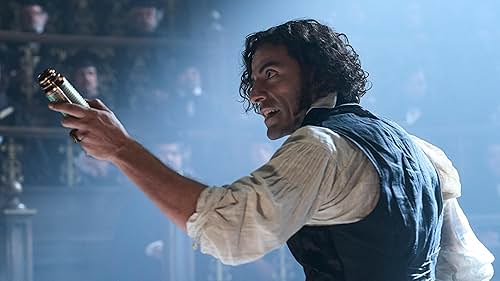
None of this is more obvious then Oscar Isaac’s titular lead performance as Victor Frankenstein, which is laced with a level of camp that would be out of place in any version of the story or even other period films. But inside of the maximalism – and likewise the inherent melodrama of what is essentially a story of a god losing control of his son – Isaac utterly shines here, being both detestable and charismatic at the same time. He’s a compelling presence that anchors much of the film’s meticulous first half, which portrays Victor’s obsession turned nightmare into one born out of a mix of jealousy and arrogance; Victor thinks he can control god simply cause somebody had the urge to tell him no once.
But once The Creature itself comes in the second half of the picture, it becomes clear what Del Toro’s real intentions are here with his version of the story. Elordi’s magnificent performance, which is a career best in a career that is seemingly only just getting started, is a physical and vocal masterwork. He does so much with so little here and his mix of curiousity and melancholy at the violent world of man is both in line with Del Toro’s “who is the real monster but man” ethos but also adds a level of tragedy to an already tragic creation. This is a kinder, more gentle Creature, even moreso then the original novel, and it’s a deliberate contrast to how Victor himself is far more brutal and torturous here compared to most versions of the mad scientist.
Those changes do add up overtime, with the film by the end very clearly becoming less a straight adaptation and more “Del Toro’s Frankenstein” in a very similar vein as his Pinocchio picture from two years ago. Said recontextualization, which adds in the background of the Crimean War as Frankenstein‘s body source, Elizabeth (played by a great Mia Goth) falling for the Creature, and a radically altered ending that sees a heart to heart between father and son replicated with creator and creation, gives Frankenstein significantly more depth then it already has and gives it the feeling of it being the culmination of all of Del Toro’s work as an artist.
And as the clear result of what he has been building to for years, it’s safe to say Frankenstein is basically as perfect a version of this can be. It’s just utterly luscious and impeccably made, and demands to be seen on the biggest screen possible simply just to experience it at it’s fullest. It’s everything you would want in a Frankenstein film for the current era, and for those who are as in love with the original material as much as myself there is reason to believe to be the all time great adaptation of the work in terms of aesthetic and thematic representation. By far and away one of my favourites of the year.
 Matt's Media Corner