By Matthew Moorcroft
Highest Recommendation
- Directed by Joachim Trier
- Starring Renate Reinsve, Stellan Skarsgard, Inga Ibsdotter Lilleaas, Elle Fanning
- R
Families are complicated.
The latest from Joachim Trier, fresh off of international acclaim with the absolutely sublime The Worst Person in the World, directly confronts those complicated families with the level of panache and attunement that we see from him on a regular basis. And what is more complicated then a family that is tied to the artistic medium of film and television and stage, were emotions can be laid bare for all to see and experience, one’s own experiences influencing how the performers view whatever characters they decide to play.
While your first instinct as a reader and watcher would be to expect this to go meta, Sentimental Value thankfully avoids that and instead goes for quiet, tender, and lowkey, instead using it’s complicated family dynamics as a way to explore how we as artists use our art to both communicate with others while also avoiding our own problems. All of this is shown basically right away in the film’s stellar prologue, which personifies the familial house our ensemble lived in. It’s the only way that Nora, a stage actress whose father – an acclaimed director in his own right – left their family when she was very young which forced her to grow up and pick up the slack for her younger sister Agnes. Now Nora, filled with stage fright in spite of her talents as an actress, can only really communicate through her performances, and closes herself off from everybody else in fear of the same thing happening again.
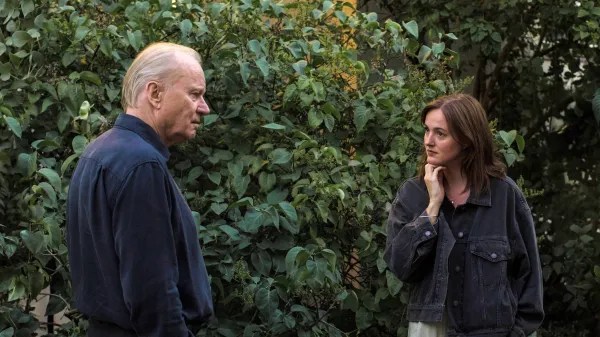
When her father, Gustav, comes back into her life though, this time with the “role of a lifetime” in a high profile film script, Nora doesn’t know how to react. After all, she can’t really talk to him outside of her craft, and Gustav honestly doesn’t know how to either. Gustav genuinely wants to reconnect with Nora, but unless she reads the script he just seems like the same aloof, maybe even uncaring divorced father she just assumed he would be. Again, families are complicated and difficult.
Sentimental Value plays out it’s cards slowly and intricately, only really playing the winning hand by the last seconds when it’s emotional catharsis sneaks up on you. And like the best winning hands, it’s all about the buildup and laying things out on the board. Trier’s direction has always toyed the line between flashy when it needs to be and restrained the rest, and Sentimental Value is probably his best example to date of that. So much of Trier’s actual direction in on his actors, who he just lets play out the scenes as realistically as possible without much flair or overexposure. Reinsve and Skarsgard are great in that regard, but it’s honestly the otherwise surprisingly well cast Elle Fanning who walks away as a surprise standout as the actress cast to replace Nora after she declines. Fanning has the unenviable task of playing a character who could have otherwise been a thankless, throwaway role, but in a lot of ways is one of the hearts of the film as she relays the real thesis of the affair.
Which is that, for all of their lives poured into their art and their emotions laid bare there, they have forgotten how to actually live. Artists need to experience life to portray life effectively, and if you instead just pour your life into art you will lose out on those fundamental human experiences that are essential to creation. While Sentimental Value is speaking to a lot of different kinds of people in the room, it feels like a very personal film for Trier and other creatives, being a film about not letting your willingness to create and share with others get in the way of your life. And it’s in those final moments of the film, where Nora and Gustav can reach some level of understanding, that art reflects life in a beautiful one-take that is foreshadowed wonderfully earlier on in the film.
And yet, it’s also the smaller moments of Sentimental Value that are really worth the price of admission. An eldest sibling hugging her younger sister and confessing her lack inability to move on from what she saw as a lousey childhood. Said younger sister struggling to keep the peace between the rest of the family. Gustav himself, torn between wanting to reconnect with his daughter but also wanting to respect her wishes, and his otherwise somewhat disconnected attitude towards the rest of the world coming into conflict with how the world actually works. A meeting by a beach. It’s all told with sincerity and grace, the characters kept intimiately close while also only letting little things slip here and there before their art can let it all bare out.
I found myself enthralled by Sentimental Value and already wanting to see it again, which is a mark of a fantastic film in my books. It’s easily one of the most densely written of the year, with a script that just makes you wanna chew on it’s subtleties and complexities, digger deeper into it’s core familial cast that just feels alive and breathing. It’s one of the years’ most impressive outings, and another example of Joachim Trier working at the top of his game in terms of talent. A must see for artists, and anybody else who has some kind of family baggage. After all – families are indeed rather complicated.
 Matt's Media Corner