By Matthew Moorcroft
Highest Recommendation
- Directed by Yorgos Lanthimos
- Starring Emma Stone, Jesse Plemons, Aidan Delbis, Alicia Silverstone
- R
The master of uncomfortable cinema returning for another round, Yorgos Lanthimos’ gleefully dark and cynical Bugonia opens with a long discussion about the nature of the honeybee worker. Jesse Plemons’ Teddy, who is the focus of the picture, describes honeybees and their service to their queen and how they function in the hive. Teddy is clearly angry at the state of the world, not just for how it has treated the honeybees he clearly admires and knows we need, but also corporations and how he feels they are exploiting him – a working class member of society trying to support his autistic brother in the wake of his mother passing away – and everyone else. You listen and nod your head in agreement, seeing his points… and then he brings up aliens, and you have to do a double take.
Bugonia is filled with these moments of double takes and reconsiderations. As a remake of cult Korean hit Save the Green Planet! – of which Bugonia is remarkably faithful to in spite of some clear tonal differences – and Lanthimos’ own penchant for having strange, almost alien like characters in his lead roles, it feels like a strange inside joke at first to have a film where the main conflict involves a conspiracy about alien forces who may or may not be manipulating humanity to their own ends. Placing that conspiracy theory thinking, especially a character like Teddy who is so far down the rabbit hole that pulling him out might be impossible, against modern corporate speak however? Now there is a movie, and that’s where the double takes happen as you realize this is a discussion where nothing is getting done and nobody has anything worthwhile to contribute while the world burns.
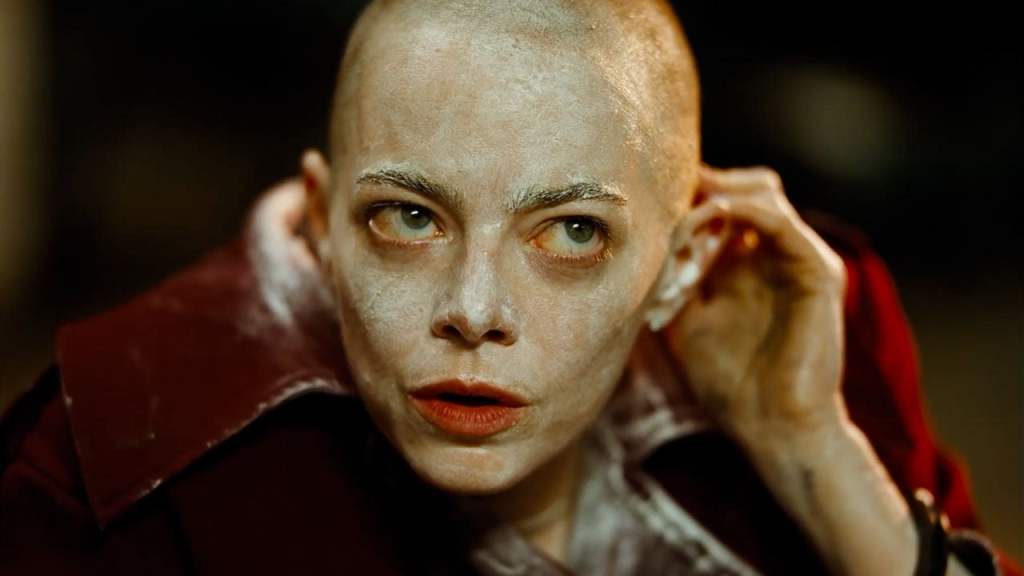
And as Bugonia progresses, particularly after Emma Stone’s CEO character Michelle gets kidnapped and threatened by Teddy and his brother, it’s clear that Lanthimos’ own misanthropy is at the highest it’s maybe ever been. It’s a film where both sides of the pond are equally as vile and difficult to really root for, but you are forced to reconcile your own biases and ideas about these people in order to find something to ground the film in. Teddy himself is, on paper, sympathetic, but is so far gone and manipulative that by the end it’s difficult to find sympathy. Meanwhile Michelle is not sympathetic at all, being the CEO of a massive company and caring more about brand image then anything else. A scene of her telling her employees to “go home at 5 on the dot unless they have work to do” is a great example of this; performative progression while maintain the status quo. But at the same time, Michelle is left with some level of humanity in the brief moments she does connect a bit with Teddy, and as her actions get more and more desperate it becomes clear she is only acting as per self-defense rather then out of spite.
Both Plemons and Stone are putting in generational work here, using this ample opportunity to dive deep into their character dynamics and intricacies while also maintaining Lanthimos’ signature deadpan style of humor. Will Tracy’s script, hot off of his work on The Menu, is a good fit for Lanthimos and while it’s certainly less strange sounding then his other work – again, in a weird twist of fate, his eventual alien movie is probably his most human sounding one – it still has many of his trademarks. A dinner scene between Plemons, Stone, and newcomer actor Aidan Delbis (a remarkable debut) is probably most telling of this as it cuts between each actor out of frame of each other as they deliver their lines coldly; distant yet close. And yet, like the best of Lanthimos’ work, it’s in that coldness that he’s able to find some level of humanity, even if the answer is that humanity itself is cold and dark and probably not worth it in the end.
As cynical as Bugonia ultimately is, something that it’s ending really hammers home in a final montage sequence that is easily one of the year’s highlights and an all timer downer ending, it’s interesting that Bugonia‘s thesis also argues in favor the same feelings that the opening of the film wants you to question, which is to not judge an entire book by it’s cover. Michelle’s final judgment on humanity on paper might seem sound, especially after her experience and the general course we seem to have laid ourselves upon, but it’s also a limited point of view, and that ending makes it clear that not everyone who was affected by the annihilation of our species was contributing to it. Some were caring for others, having birthdays, making love, or actually trying to do some level of good by cleaning up the world. Is Michelle wrong? I have no idea, but the movie certainly wants you to second guess everything.
And if Bugonia truly does want that second guessing as part of the narrative structure, then Bugonia is quite possibly the paranoia thriller to end all paranoia thrillers; a movie where everyone is right, everyone is wrong, and who cares cause we are all selfish assholes anyways who have already made up our minds about other people and the world around us. As a piece of cynical fiction, Bugonia is by far and away one of the year’s most adeptly made films and one of the year’s best, but as a piece of forewarning about our own inability to sit down and listen, it might be even more effective. Starting a dialogue is that easy.
 Matt's Media Corner