By Matthew Moorcroft
Highest Recommendation
- Directed by Jonathan Glazer
- Starring Christian Friedel, Sandra Huller, Johann Karthaus, Luis Noah Witte
- PG-13
When discussing historical tragedies in film, there is an inevitable urge to frame the action as some sort of humanitarian service; a documentation for future generations to perceive maybe not the full horror but just enough so they can understand the paths that have led humanity to this point. The Holocaust, being one of the most reprehensible acts of human evil in the 20th century in a long, long line of reprehensible acts of evil, is probably subject to this the most and for understandable reasons. But what’s more difficult to remember is how much this medium – the same medium that is now giving voices to the previously unheard cries of the oppressed – was also helped shaped by the fascist ideologies that caused said atrocities in the first place.
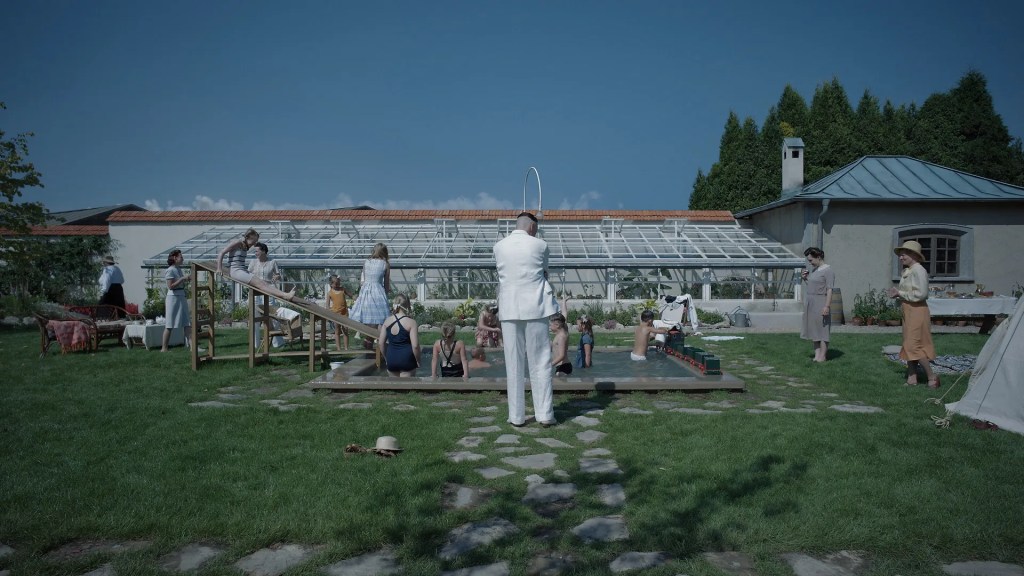
The Zone of Interest is a film that firmly rejects the basic cinematic form. There is no three-act structure, no basic overarching narrative outside of a throughline involving the family trying to adjust to a new home. Everything is shot at a distance, a documentary with actors and only the bare amount of actual scripting involved. The music is only at the overture and epilogue, never on screen. It removes all sense of ambiguity and partiality to the affair, content with simply showing you things as they were without any sort of dramatization or flair.
There will be some dismissive attitudes towards The Zone of Interest from a small selection of people as simply a film about “the banality of evil” and while yes, it’s true that ultimately the film is about that I feel The Zone of Interest is much more a film about the medium of film itself. It’s a work at odds with itself on purpose, desperately wanting you to think about it’s own existence as you are watching it and what is happening elsewhere in the movie. The Zone of Interest‘s oppressive sound design – sound so gut wrenching and nauseating that you just want it to stop – tells more story then the actual story itself, letting you know that there are other things happening in the margins. Outside of the screen. Outside of the so called “Zone of Interest”.
The only cutaways, which happen three times over the course of the film and two of which involve an unnamed young girl who is left ambigious, are the only cutaways from this limited perspective, and the veil is broken each time, only reminding the viewer of what exactly is missing from the story on purpose. Sure, we know now that the Nazis lost and that history would eventually portray them as the monsters that they truly were, but in the moment, there was a day-to-day frankness about how it escalated and got to that point. We were numb to it, and we maintained an illusion of “well, if we can’t see it, it doesn’t concern me”. But that illusion is easily broken and there moments throughout where you can see it start to seep into the cast itself. A mother that arrives to live at the house only to leave as soon as she experiences the oppressive metal and fires that light the sky. A reluctance to actually discuss “work”. Even the father, the “lead” character in the piece, finds himself on the verge of vomiting randomly near the piece’s conclusion.
It’s because of this, and Jonathan Glazer’s utter refusal to commit to a narrative here, that The Zone of Interest ends up being a haunting, harrowing experience without showing literally anything. The audience fills in the blanks themselves, and the horrors of what they imagine are exactly what’s happening in the moments we can hear in the background. Whether they be the distant gunshots, the yelling of guards, or the screams of pain, Glazer makes sure that it’s always just off screen. He knows you want to see it, but that would be committing to the sin of showing. He just wants you to listen.
The Zone of Interest is sure to be analyzed and discussed extensively not just over the year but over the decade as one of the most fascinating pieces of historical fiction ever produced. It demands said discussion, but also defies general perception on what film actually is. It’s not just a challenging film for audience in it’s content and how it forces them to be complicit in the horrific atrocities, it’s challenging simply due to it pushing what the general definition of the medium actually is. Whatever comes of it remains to be seen, but as it’s own work, The Zone of Interest is Glazer’s finest hour – a culmination of his meticulously crafted career as he finally delivers his masterpiece for the ages.

