By Matthew Moorcroft
No mainstream director is as cyclical and as repeating as Christopher Nolan. As I mentioned in my prior review of The Odyssey, Nolan has been exploring similar ideas and throughlines in his career to the point where somebody could think that he has one singular thesis and that’s it. While I disagree with that point – his films actually come to vastly different conclusions based on the subject matter and the point in his career that they are made in – it is true that, if one follows along the path, they can clearly see how Nolan gets to this point.
And in some ways, even more then Oppenheimer, all roads lead back to The Odyssey, which has stuck with me in the days following my first viewing of it. So much about The Odyssey, from it’s themes to it’s story to even it’s dual flashback narrative structure feels like things that Nolan has been experimenting his entire career specifically for this moment in time. It’s themes of apocalyptic scenarios rang by men who whose own hubris aided in accelerating the end, of which this completes a trilogy with Tenet and Oppenheimer, are the most obvious, and then it’s structure is probably closer in line to something like The Prestige or Memento then it is any of his other big blockbusters. But it’s actually a similarity to a film I least expected that is catching my brain the most.
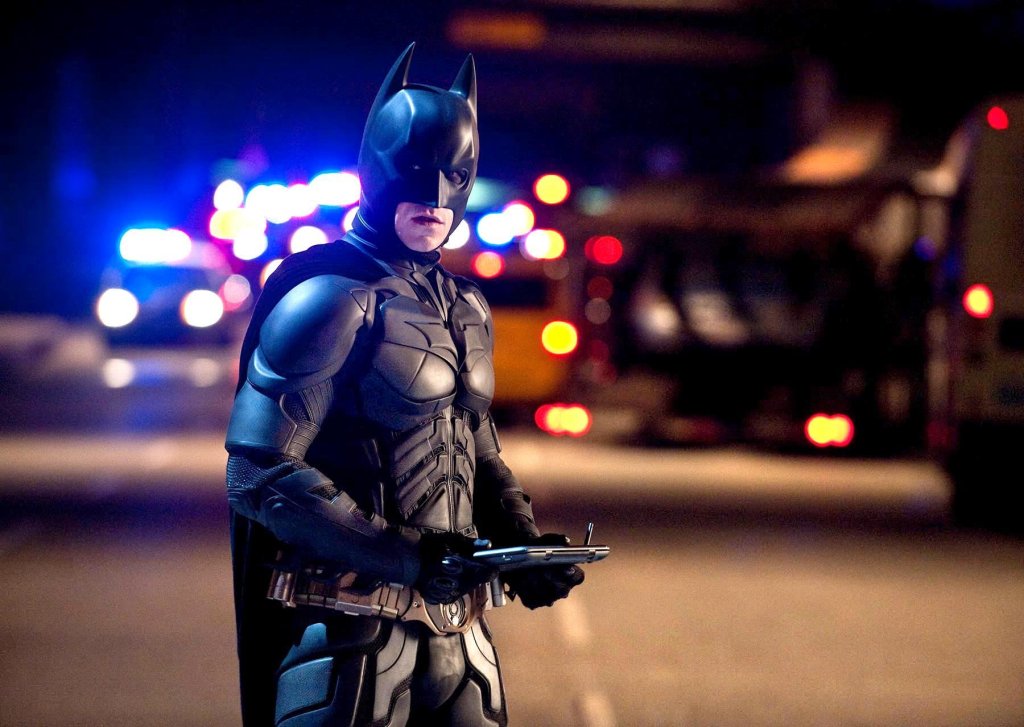
So, let’s talk about The Dark Knight Rises, shall we?
I don’t remiss anybody for being sick of the Dark Knight Trilogy in pop culture discussion. In a lot of ways, it’s responsible for both the best and the worst things to happen in much of our current blockbuster environment – from the rise of superhero films (although X-Men and Iron Man are more responsible in my judgment) to the “dark and gritty” reimagining that became the go to line for any adaptation or reboot in the 2010s, years later and it feels like we have exhausted every point of discussion on the trilogy. Hell, by the time it’s much anticipated – and much divisive – finale, The Dark Knight Rises, released it actually felt like much of the discourse was starting to reach it’s most stagnant, and most of the actual discussion surrounding The Dark Knight Rises was less about the film itself and more about it’s relationship to the grander Batman mythos and superhero films in general. The film itself seemed, at least to most, a secondary concern.
To this day The Dark Knight Rises remains one of Nolan’s least discussed films, and it’s not hard to see why. Several rewatches of it have proven that, while it’s indeed excellent in key areas and succeeds as a satisfying, entertaining good time and finale to Nolan’s ambitious reimagining of the Caped Crusader, it’s also messy in a way that is usual for Nolan at this scale. Some of the action is a little “stagey” for the worse, it’s got a ton of exposition to the point of bursting, and it’s politics are probably the muddiest out of all of the Nolan Batman movies. But it’s ultimately a fascinating part of Nolan’s career as the final film shot by Wally Pfister, which in a way also, just like the trilogy it’s wrapping up, it’s the end of an era and the start of something new.
But it’s also, in a ton of ways, Nolan’s most thematically similar to The Odyssey, strangely enough. The references are more then just obvious riffs like Bruce Wayne using a bow to reveal himself to the beautiful eventual love of his life in Selina Kyle or Batman himself returning after seven years and a trip into the literal underworld to rediscover his own place. But the similarities don’t stop there, and instead extend into the film’s thematics and even some of it’s presentation. Nolan has described The Dark Knight Rises as his take on A Tale of Two Cities and while that certainly was an influence it’s clear The Odyssey was on his mind long before he decided to actually make a film version of the epic poem.
Both The Dark Knight Rises and The Odyssey are, fundamentally, about the human instinct towards violence and it’s seeming inevitability. You can hold it off as much as you’d like – whether it be the suitors being left alone in Penelope’s household for upwards of ten years while Odysseus is gone or the Harvey Dent Act keeping crime at an all time low in Gotham – but eventually it’s going to come at your doorstep and you best be prepared. But with humanity so inclined to violence, is it even worth saving? Both films ponder this question and ultimately point to the same answer, which is that it’s better to die trying then to just languish and let the apocalypse consume us. Even the nuke in Rises functions almost as a Trojan Horse in a way, being tied to a metaphorical gift underneath the city that Wayne Enterprises had been building for some time.
If anything, these parallels are fascinating to me solely from the basis of Nolan clearly having wanted to adapt this tale before. It’s a circular moment in his career, and one that could indicate that The Odyssey itself is a transition point in it’s own way; a second end to the start of a third, brand new beginning for Nolan in the future. People have been asking what Nolan does next after this considering the scale but if Rises is any indication, it’s likely what is coming next is going to be a pivot into a new direction for the director, which is exciting.
And maybe finally we can give The Dark Knight Rises, as messy as it can be, it’s much deserved flowers in the wake of things.

